Blog6 min read
Pay for a hundred videos and you get an afternoon's work
Notes from this week's Marketing Operators. Ridge is moving creator pay off TikTok Shop sales and onto Meta ad revenue. HexClad found its intent segments too small to use. Here is what carries over to an ad account.

Marketing Operators put out its weekly episode on 15 September 2026. Two of the three hosts were on. Connor MacDonald runs marketing at Ridge. Connor Rolain runs growth at HexClad. Both had just come back from a summit held by Postscript, the SMS platform, so the first half is about retention and the second half is about TikTok Shop. We build paid social creative, not text message flows. We listened for what carries over to an ad account, and three things did.

HexClad could not make intent segments big enough
Rolain said HexClad had about 100,000 people buy in the last 60 days. Even at that volume, segmenting on intent failed. The team used to route a buyer into a category flow only if that buyer had shown interest on the site, for example by viewing a knives page. The segments came out too small to push any volume through. So they went back to sending every buyer through the same flows, one category after another. He calls it a waterfall.
What he wants now is more context on each person, and sooner. Postscript's AI messaging product, Shopper, holds a two way conversation and saves what it learns to the customer's profile. Rolain's plan is to start that conversation right after the first order. Why did you buy the set, is the next one for you or a gift, what are you cooking. Then a buyer lands in the one flow that fits, instead of all of them in turn.
Ad accounts fail the same way. Split your buyers into personas on thin signal and every persona starves. Finer slicing does not fix that. More context on each buyer does, gathered early, along with few enough personas that each one gets real volume behind it.
A contest for a hundred videos buys an afternoon
MacDonald described how Ridge pays TikTok Shop affiliates. There is commission on sales. There are also contests. Make a set number of videos, and he gave figures from 30 up to 100, clear a sales threshold, and earn 5,000 dollars. The trouble is that wallets do not sell well on TikTok Shop. Commission on a product that does not sell is small, and the threshold is a coin toss. So the creator does the arithmetic. Any one video is worth very little. In MacDonald's telling, they make a hundred in an afternoon and a half, post them all, and hope one lands.
Ridge is changing what it pays for. Wallet ads still beat everything else in its Meta account, so the new deal is a percentage of the revenue attributed to a creator's ad on Meta, whether or not that video ever sold a unit on TikTok. MacDonald's point about tooling matters here. TikTok Shop used to be the only place a creator could watch earnings move in real time. Third party creator platforms now show a daily number for Meta as well, so the feedback loop no longer belongs to one app.
Pay per video and you are buying videos. Pay on what the ad earns and you are buying ads.
Earlier this month we wrote that twenty variants of one idea count as one ad. This is the supply side of the same problem. Nobody sets out to make a hundred near copies. They make them because that is what the pay rewards.
The product that wins on TikTok is not your hero
Ridge's best seller on TikTok Shop is a 29 dollar tracker card, not a wallet. The winning tracker card content moved over to Meta and worked there too. Affiliate content reached 30 percent of Ridge's everyday carry spend on Meta, and most of that was tracker card ads. Order value on those ads was about 80 dollars, which MacDonald put at 30 to 40 percent under what the category normally sees. Using Northbeam's product analytics, he found 60 to 65 percent of the revenue those ads drove was the tracker card itself. It had become its own funnel, with its own economics.
HexClad came at it from the other side. On Meta it sells sets. This year it built a funnel around an egg pan and a rice pot, each about 130 dollars. Order value on those ads runs 250 to 300 dollars, because people arrive for one pan and fill a cart. Rolain called it one of the most scalable new funnels of the year. He now plans to run single pan content from TikTok affiliates on Meta, and expects it to reach buyers the set ads never did.
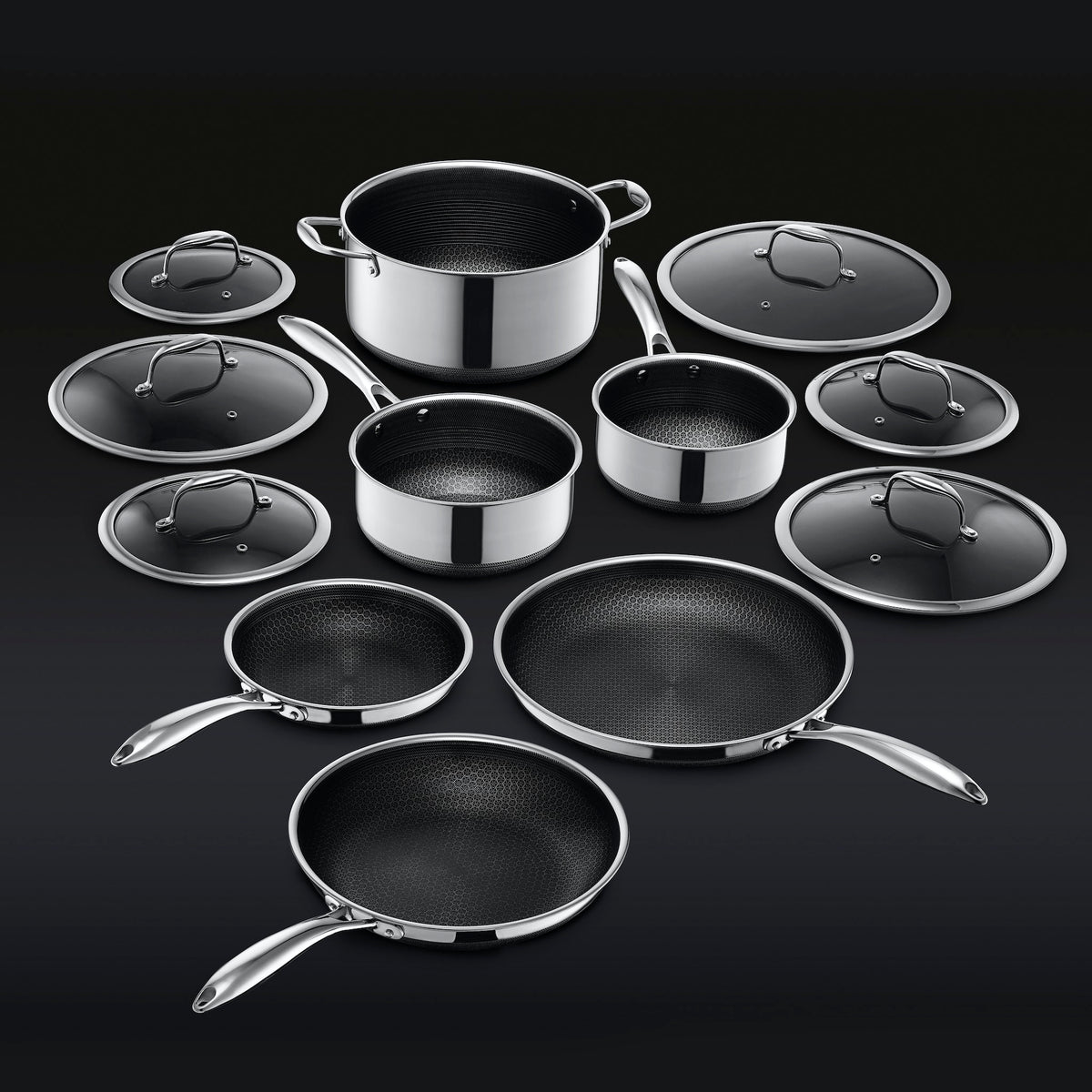

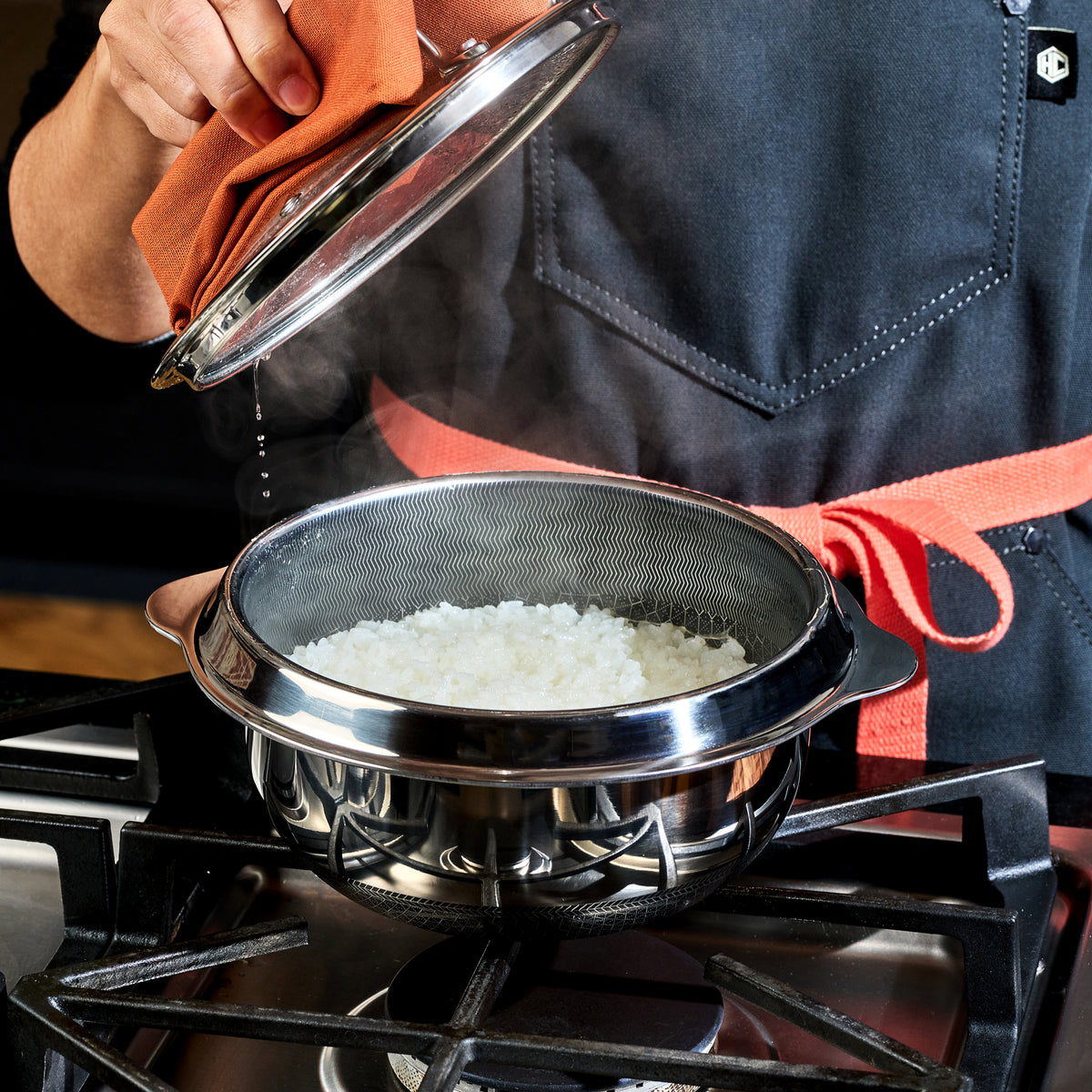
A different product in the ad is usually a different buyer on the other end. That is a persona test, whatever the merchandising team calls it.
The objection from inside the same episode
Rolain also made the case for volume, and made it well. HexClad is a seven figure brand on TikTok Shop and will spend well into six figures on GMV Max ads this month. GMV Max is TikTok's automated campaign type for Shop sellers. He credits the sheer volume of affiliate content for letting that spend scale, and says the channel is where Meta was for HexClad in 2021. So which is it?
Both, and the difference is where the volume comes from. HexClad's hundred or so new pieces came from many different affiliates, recruited through a competition. Many people do not converge on one idea. One creator clearing a hundred videos in an afternoon is one idea. And the single best Meta result Rolain mentioned came from one affiliate who, in his words, works head and shoulders above everyone else. That creator did not come out of the competition.
What we would hold loosely
Both hosts said they were speaking unofficially and partly guessing at Postscript's plans. They had just been the company's guests. Treat the product claims as a preview, not a review.
Ridge moved about 30 percent of its text list to RCS, the richer branded replacement for SMS, and is seeing a 46 percent lift in revenue per message and 25 percent more clicks per message. That is one brand, a test still running, with no sample size given. MacDonald himself expects part of the lift to be novelty that fades once every brand moves over, and RCS costs more to send. The claim that merging duplicate profiles could cut a brand's profile count by 5 to 15 percent was a Postscript cofounder's guess in conversation. And MacDonald labelled his read that TikTok affiliates are tired of TikTok as anecdotal.
One note on our own sourcing. We worked from YouTube's automatic captions, which do not name the speaker. We attributed by context, HexClad details to Rolain and Ridge details to MacDonald. The timestamps are below so you can check us.
Monday
Open whatever agreement governs your creative, in house or out. Find the unit you pay for. If it is a video, a deliverable or a batch, you already know what you will get more of. Then list the products in your ad account beside the products that sell on each channel. Any product that sells somewhere and has never led an ad is a buyer you have not met yet.