Blog5 min read
Meta is rewriting the text on your ad images
Advantage+ creative can now replace the headline inside a static ad and keep your font and layout. Here is how to check your ads, and when to leave it on.
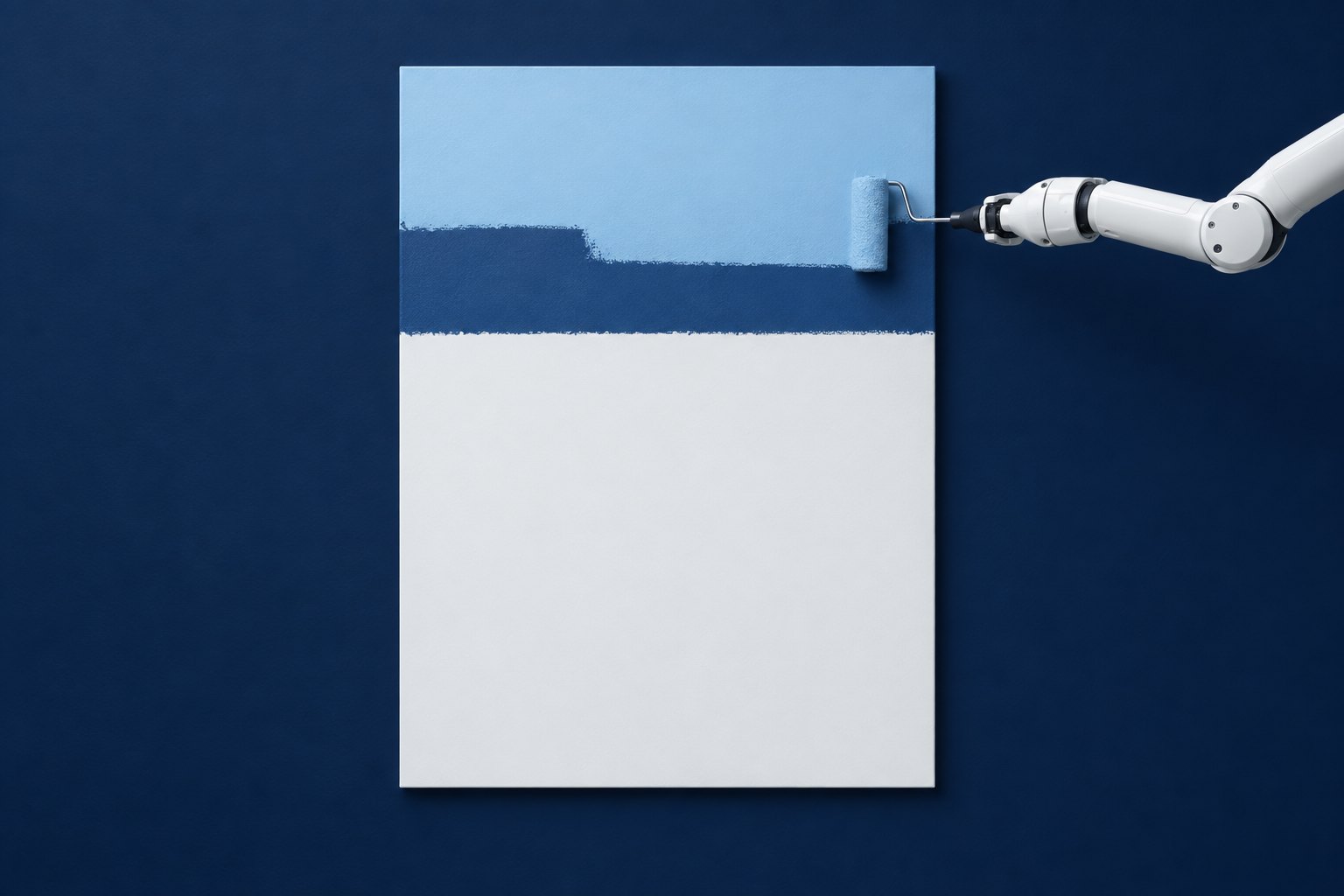
You upload a static ad. The headline is part of the image. Your team wrote it, checked it and signed it off. A week later a version of that ad is serving with a different sentence, in your font, in the same spot. Nobody on your side typed it.
That is now possible on Meta. Jon Loomer documented it in his own ad account on 28 July 2026. Advantage+ creative took an uploaded image, used it as a template, and produced new image options that replaced the main headline. The fonts, colours and layout around it stayed the same. His example showed eight alternatives across three messaging angles. They appeared already selected. He could deselect them.
What is known, and what is not
Known: the feature exists, it changes text inside the image rather than only the primary text field, and in the first documented case the new versions arrived preselected. That last part matters most. A preselected option goes into rotation unless somebody opens the ad and says no.
Not known: how far it has rolled out. Reports so far point to availability that varies by account, and Meta has not published a dated announcement for this specific feature. So the honest advice is not that every account is affected. It is that you cannot tell from the outside, and checking takes minutes.
Why text in the image is a different problem
Meta rewording your primary text is not new. Text inside the image is. It is where brands put the words they are most accountable for: a price, a discount, a guarantee, a claim that went through legal.
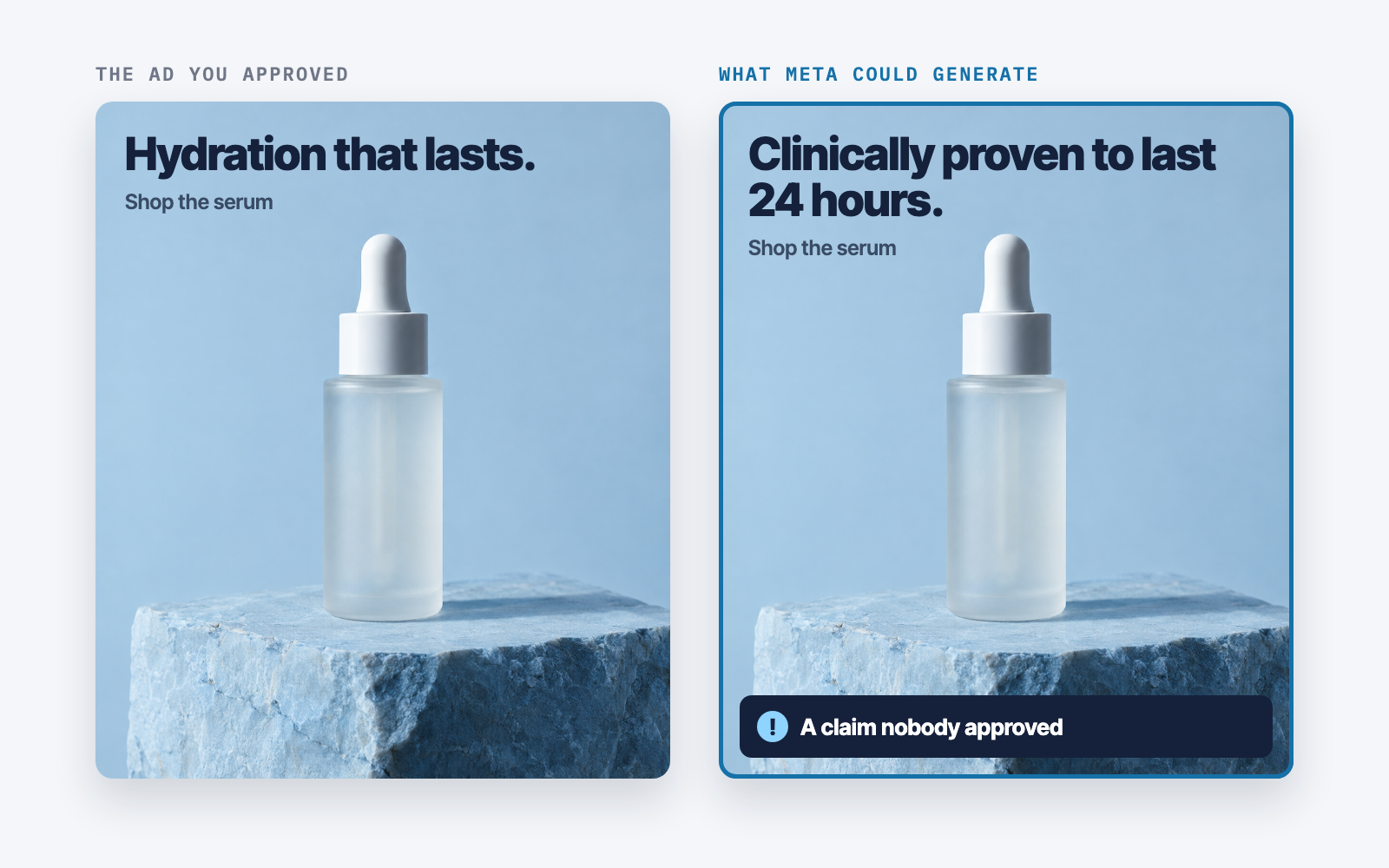
The risk is not that the new line is badly written. It may read better than yours. The risk is that it says something you cannot back up. SparkUGC's guide to Advantage+ creative makes the point directly: Meta's ad review judges the variation it served, not the ad you built. In health, finance and legal advertising, one changed word can turn a line you are allowed to run into one you are not.
When to leave it on
There is a real upside. In a concept test the headline is the variable, and a set of new angles generated from your own image is cheap data on what your buyer responds to. Loomer's example grouped its variants by messaging angle, which is close to how a strategist would design that test anyway.
The condition is that you read what it served. Generated headlines only teach you something if you log which wording won and brief it back into the next round of creative. Left unread, they are just Meta testing on your budget.
How to check your ads this week
- Open every live static ad, not just new ones, and look at the Advantage+ creative section. Deselect any generated image option you would not sign.
- On anything with a price, an offer, a guarantee or a regulated claim, switch text generation off for that ad.
- Set your defaults under Business Settings, then Advertising Settings, so new ads start from your choice instead of Meta's.
- Where you want it on for a test, write down the original headline first, so the result compares like for like.
- Keep a record of every headline you approved. If a generated version gets flagged, that record is what shows what you actually signed.
The obvious objection
Here is the best case against all this. Meta is writing headline tests for free, and headline testing is what brands pay agencies for. Meta's delivery also rewards variety, as we wrote about its creative diversity score. More versions should help.
Partly true. The difference is where the sentence comes from. A headline your strategist wrote came from something a buyer said. A headline Meta generated came from your image. Both are worth testing. Only one of them has had anybody check it.
Meta no longer only delivers your ads. In more and more places, it edits them. Treat it like a new teammate: useful, fast, and in need of a brief and a sign off.